From Cool Trailer to Condensation Disaster: Where Moisture Problems in the Supply Chain Actually Start
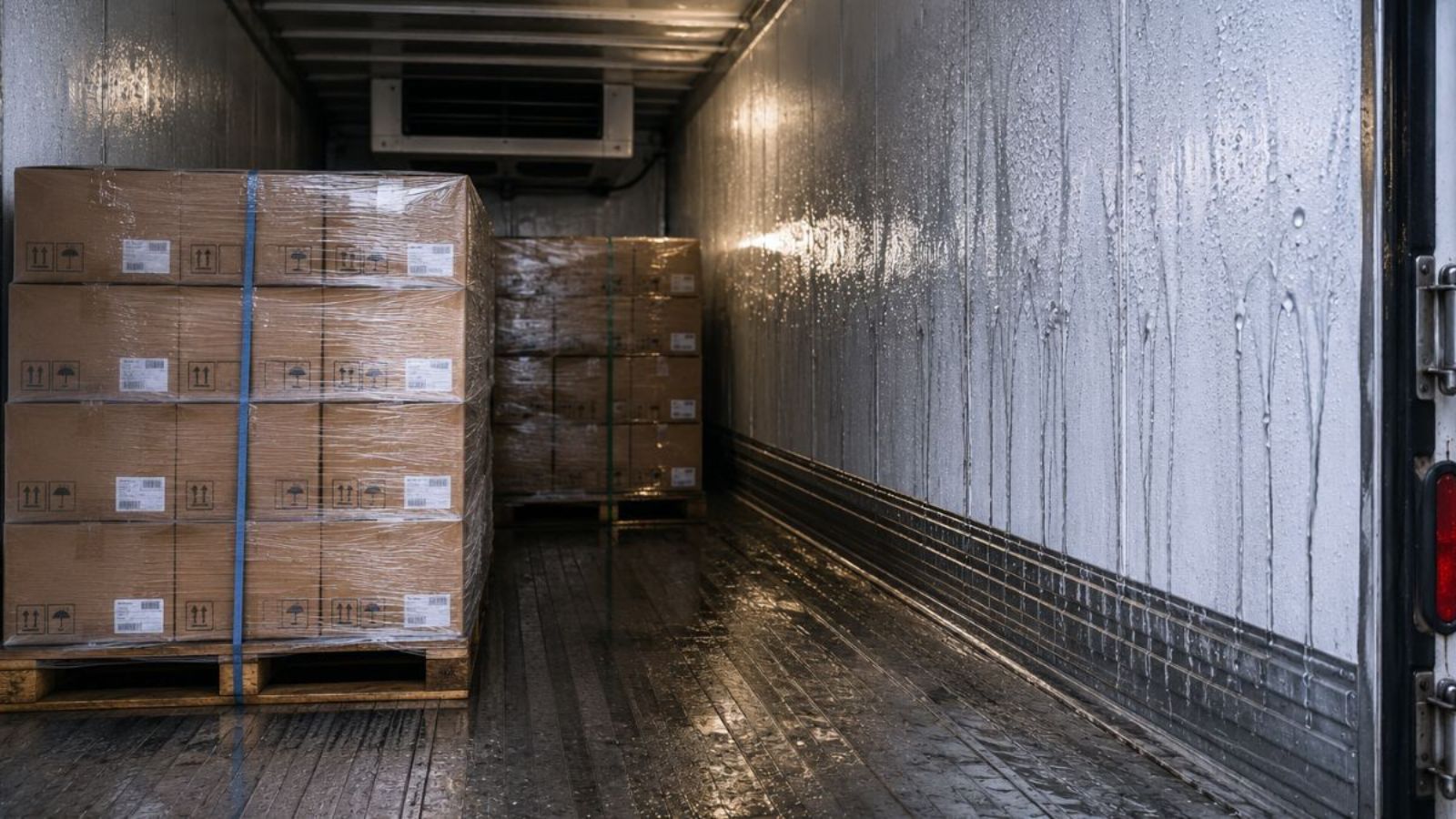
Moisture problems in the supply chain can develop even when a refrigerated trailer maintains the correct temperature from pickup to delivery. While refrigeration equipment is often the first area investigated, it is not always where the problem begins.
Condensation is often treated as a transportation problem, even though the first opportunity for moisture to develop may occur during staging, loading, or cargo handling. In many cases, the visible damage is simply the result of conditions that have been building throughout the shipment.
Because moisture does not become visible immediately, identifying its true source can be challenging. Looking beyond the point where condensation is discovered often provides a more accurate explanation of how the issue developed and where corrective action can be most effective.
Moisture Starts Before Transit
Condensation usually appears after a shipment has been moving for some time, but the conditions that create it often develop before the trailer leaves the dock.
Products may wait on an open loading dock while schedules are adjusted or paperwork is completed. During that time, warm, humid air surrounds the cargo. Once the trailer is sealed and cooled, that moisture condenses on cold surfaces such as cartons, pallet wrap, and trailer walls.
Because the water becomes visible later, the loading process is not always recognized as the starting point.
Loading Docks Introduce Humidity
The loading dock is one of the earliest points where excess humidity can enter a refrigerated shipment. Even when products are properly cooled, delays before departure can expose them to warm, humid air that later condenses inside the trailer. Common contributing factors include:
- Trailer doors left open longer than necessary
- Products staged near open dock doors
- Wet pallets loaded after rain or cleaning
- Warm products placed into refrigerated trailers
- Damp trailer floors before loading begins
Because these conditions occur during routine operations, they may not draw attention at the time. By the time condensation appears at delivery, the shipment has often carried that trapped moisture for hours, making the loading process easy to overlook during an investigation.
What Condensation Patterns Reveal
The location of moisture often provides useful clues about where the problem started.
For example, water collecting on the trailer ceiling may indicate humid air became trapped during loading. Damp outer cartons with dry products inside may indicate repeated exposure to fluctuating temperatures rather than a refrigeration failure. Moisture concentrated near trailer doors may reflect frequent loading or unloading during multi-stop deliveries.
Observing where condensation appears can help determine whether the issue began before, during, or after transportation.
Cargo Placement Affects Airflow
Refrigerated trailers rely on steady airflow to maintain consistent conditions throughout the load. Even a properly operating refrigeration unit cannot cool evenly if air movement is restricted. Loading practices that commonly interfere with airflow include:
- Placing pallets directly against trailer walls
- Blocking return air channels
- Stacking cargo too tightly together
- Mixing pallet heights that interrupt circulation
In practice, uneven airflow often creates isolated areas where condensation develops while the rest of the shipment remains dry. When moisture is limited to specific sections of the trailer, cargo placement is often worth reviewing before concluding that the refrigeration system failed.
Packaging Shows Early Warning Signs
Packaging often reveals moisture issues before the products themselves show visible damage. Changes to cartons, labels, or pallet wrap can indicate that humidity has been present throughout the shipment, even when the cargo still appears to be in good condition. Common warning signs include:
- Softened corrugated cartons
- Peeling or wrinkled labels
- Damp shrink wrap
- Weakened packaging adhesive
- Water stains on pallet corners
These signs also help distinguish surface condensation from moisture that has penetrated the product. Identifying that difference early can help determine whether the issue developed during transportation or whether additional inspection of the cargo is necessary.
When Temperature Changes Create Condensation
Cold chain shipments rarely remain in one environment from origin to destination. Every transfer between warm and refrigerated spaces creates another opportunity for humid air to enter the shipment.
| Supply Chain Stage | Potential Moisture Risk |
|---|---|
| Warehouse staging | Warm air contacts cooled products |
| Trailer loading | Humid air enters through open doors |
| Transportation | Condensation forms as air cools |
| Distribution center | Door openings introduce additional humidity |
| Final delivery | Products move between different temperatures |
The more often these environmental changes occur, the greater the opportunity for condensation to develop.
Routine Inspections Catch Early Issues
Moisture problems rarely appear without warning. Routine inspections during loading, transportation, and receiving help identify developing issues before they affect an entire shipment. Inspection points often include:
- Water droplets on trailer ceilings
- Damp cartons or pallet wrap
- Moisture around door seals
- Standing water inside the trailer
- Ice buildup in isolated areas
Recording these observations at multiple points in the journey provides more than documentation. It helps establish when moisture first appeared, making it easier to determine whether the source originated before loading, during transit, or after delivery.
Small Operational Mistakes Add Up
Recurring condensation is rarely caused by a single mistake. More often, it develops from several routine decisions that allow humidity to build over time.
Examples include extending loading times, opening trailer doors more frequently than necessary, mixing products with different temperature requirements, or skipping trailer inspections before loading. While each action may seem minor, their combined effect can increase the likelihood of moisture-related damage.
Reviewing everyday operating procedures often reveals opportunities to reduce condensation without significant changes to equipment.
Looking Beyond Refrigeration
Reducing moisture problems in the supply chain involves more than maintaining trailer temperature. Moisture is influenced by the entire freight movement process, from warehouse staging and loading practices to airflow, packaging, environmental transitions, and routine inspections.
When condensation is treated as an operational issue instead of only an equipment issue, supply chain teams are better positioned to identify where moisture begins, respond before damage spreads, and improve the consistency of refrigerated shipments from origin to destination.
Nationwide Freight Brokerage & Logistics Services
At The Junction LLC, we provide tailored freight brokerage solutions to meet the evolving needs of businesses across industries
Trucking & Freight Shipping Services:
-
- Overweight,
-
- Over-dimension
-
- Time-sensitive shipments
-
- LTL (Less-Than-Truckload)
-
- FTL (Full Truckload)
-
- Flatbed
-
- Flatbed LTLRGN (removable gooseneck lowboy)
-
- RGN (removable gooseneck lowboy)
-
- Maxi’s / A-Train / B-Train
-
- Heavy Haul
-
- Over Dimensional
-
- Dry Van
-
- Dry Van LTL
-
- Refrigerated
-
- Refrigerated LTL
- Power Only
Nebraska Warehouse One-Stop-Shop | TechnologyEnabled 3PL Value-Added Services Warehouse | Freight Broker | Logistics
Nebraska Warehouse doesn’t just help to facilitate your shipments, but we are truly a one-stop-shop solutions provider. Our services include:
Latest News
The latest information about our Omaha storage warehouse services

Midwest Cross-Dock Staging vs. Direct Truckload: Which Protects Fall Retail Resets at the Lowest Total Cost?
Fall retail resets create a narrow transportation window. Merchandise may be ready before stores...
September 2, 2026
From Cool Trailer to Condensation Disaster: Where Moisture Problems in the Supply Chain Actually Start
Moisture problems in the supply chain can develop even when a refrigerated trailer maintains the...
August 4, 2026
How One Missed School Delivery Window Turned Into a Weeklong Cold Chain Headache
A delivery appointment is more than a scheduled stop. In cold chain logistics, it helps keep...
July 3, 2026
Are You Using the Right Packaging Strategy for Heat-Sensitive Products in Transit?
Shipping products in hot weather can be difficult. Heat can affect many types of goods, especially...
June 12, 2026

Manual Processes vs Automated Workflows: Which Keeps Freight Moving Better in Peak Season?
Peak shipping season can create major pressure across the supply chain. Freight volume increases,...
May 21, 2026

5 Operational Tweaks That Help Keep Freight Moving When Heat, Traffic, and Volume Collide
Summer shipping becomes more difficult when heat, traffic, and freight volume rise at the same...
May 11, 2026

LTL vs. FTL: Which Option Actually Saves You More This Summer
LTL vs. FTL remains a central comparison for businesses managing shipping costs during peak summer...
April 14, 2026
Avoid the Summer Freight Squeeze: How Seasonal Demand Impacts Rates and Capacity
Every summer, many shippers and carriers feel the summer freight squeeze as increased demand and...
March 23, 2026

Questions Every Shipper Should Ask Before Choosing A Freight And Logistics Partner
Choosing a freight and logistics partner requires careful evaluation of cost, service quality, and...
March 2, 2026

How AI and Machine Learning Are Revolutionizing Freight Route Optimization
AI and machine learning reshape freight logistics by turning raw shipment data into smarter routing...
February 5, 2026